Introduction
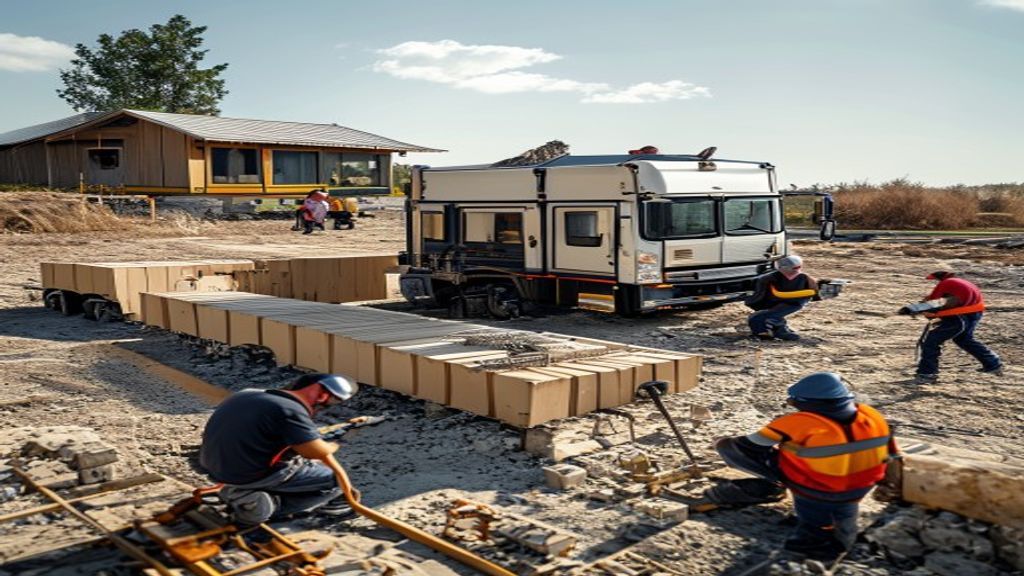
When the first shipment of a modular cabin pulls into the site, the difference is almost tangible. The walls arrive already cut, the windows pre‑installed, and the insulation sealed—everything that would normally sit in a pile of raw lumber and drywall is suddenly a finished piece ready for assembly. Builders who have made the leap report noticeably slimmer waste streams and schedules that shrink by weeks, not just days. Let’s unpack the mechanics behind those savings and see how modular construction reshapes the bottom line.
1. Unlock Savings: Why Modular Cabins Reduce Material Waste
- Precision‑cut components – In a factory setting, CNC machines slice panels to exact dimensions, leaving only a thin kerf of scrap. On a typical jobsite, workers often trim boards repeatedly, generating uneven off‑cuts that end up in the landfill.
- Standardized inventories – Manufacturers keep a tight stock of standardized panels, so the same sizes are used across multiple projects. This reduces the need to order custom lengths that sit idle while waiting for the next build.
- Integrated systems – Electrical wiring, HVAC ducts, and plumbing are routed within the wall cavity before the panel leaves the plant. Installing these systems on‑site usually means extra joist cuts and patch‑up work, which adds to material loss.
Because of these practices, the overall waste ratio can drop from the industry‑average 10‑15 % to under 5 % according to several field surveys. The result isn’t just a greener footprint; it translates into direct cost reductions on lumber, drywall, and disposal fees—savings that appear on the balance sheet before the first nail is driven.
2. Accelerate the Clock: Off‑Site Fabrication vs. Traditional On‑Site Build
- Parallel processing – While the foundation is being poured, the factory is already assembling the cabin’s structural frame. In conventional builds, framing begins only after the concrete cures, adding idle time.
- Weather‑immune production – A controlled indoor environment eliminates rain‑related delays that can halt on‑site framing for days. The result is a predictable daily output of completed modules.
- Reduced on‑site coordination – With most trades pre‑installed, the on‑site crew focuses on positioning and bolting modules together. This streamlines the schedule to a few critical path activities rather than a sprawling sequence of trades.
Take a recent remote‑site office project as an example: the foundation was ready in ten days, and the first completed cabin was craned into place the very next week. A comparable stick‑built office took nearly twice as long, largely because each interior wall, electrical run, and HVAC duct had to be tackled sequentially on a weather‑dependent schedule. The modular route shaved roughly 30 % off the overall timeline, giving owners earlier occupancy and faster revenue generation.
3. Streamline Labor: Fewer On‑Site Workers, Faster Assembly
When a modular cabin arrives on the job site, most of the heavy‑lifting—framing, roofing, interior rough‑ins, and even pre‑tested HVAC units—has already been completed in a factory. Because the building envelope is essentially “plug‑and‑play,” the crew that shows up is typically a handful of crane operators, a rigging team, and a small group of finish carpenters who add final trim, paint, and custom fixtures. In practice, a project that would have required a rotating roster of ten to twelve tradespeople can be finished with half that number, which translates into lower labor‑hour invoices and fewer safety‑site meetings.
For developers of luxury homes, the reduction in on‑site manpower does not mean a compromise on quality. Instead, the precision‑engineered modules deliver a consistent finish that high‑end interior designers can polish rather than rework. A recent mountain‑resort cabin project illustrated this point: the modular team needed only three days of on‑site labor to position and secure two 30‑ft modules, whereas a comparable stick‑built structure took eight days of coordinated trades, exposing workers to unpredictable weather and site logistics. The result? Faster occupancy, fewer payroll spikes, and a tighter schedule that keeps the project’s reputation intact.
Beyond sheer numbers, modular construction improves labor productivity by eliminating the “hand‑off” fatigue that plagues traditional builds. Since each module arrives fully wired and insulated, electricians and plumbers spend their time making final connections instead of threading conduit through walls that are still being erected. This streamlined workflow not only speeds up assembly but also reduces the likelihood of re‑work—a common hidden cost when trades overlap on a chaotic site.
4. Predictable Budgets: Fixed‑Price Contracts Made Possible by Modular Design
One of the most compelling financial arguments for modular cabins is the ability to lock in a fixed price early in the development phase. Because factories operate under controlled conditions, material consumption, labor rates, and production timelines are far more predictable than the fluctuating variables of on‑site construction. This predictability enables developers—and high end real‑estate companies that demand budget certainty—to negotiate lump‑sum contracts that include everything from structural panels to interior finishes.
The fixed‑price model works best when the design is “module‑ready” from the outset. Architects break the building down into repeatable units—often 12‑ to 20‑foot sections—that can be fabricated en masse. By standardizing dimensions, the manufacturer can source bulk‑order steel, paneling, and insulation at discounted rates, and those savings flow directly into the contract price. As a result, the client receives a transparent cost sheet that lists “module A” at $45,000, “module B” at $38,000, and so forth, leaving little room for surprise mark‑ups once the foundation is poured.
In practice, this budgeting confidence has tangible downstream benefits. When a coastal resort chain partnered with a modular supplier to add 15 new guest cabins, the fixed‑price agreement eliminated the need for change‑order negotiations that typically stall projects. The owner could secure financing based on a single, locked‑in figure, and the construction manager could allocate cash flow to other site improvements rather than chasing incremental cost overruns. The end result was a 12 % reduction in total project expenditure and a delivery schedule that stayed within the original 24‑month window.
Because the risk of cost escalation is baked into the modular process, owners can also plan for contingencies more effectively. Rather than allocating a vague “10 % contingency” that often becomes a catch‑all for overruns, they can set a precise reserve for known variables—such as site grading or utility hookups—while trusting that the modular component of the budget will stay steady. This clarity is especially valuable for high end real‑estate companies that must report accurate ROI figures to investors and maintain the credibility needed to attract future premium clientele.
The modular cabin revolution isn’t just about building structures faster and cheaper—it’s fundamentally reshaping our approach to development itself. When you combine reduced material waste with off-site precision manufacturing, streamlined labor requirements, and predictable budgeting, you’re not just saving time and money; you’re gaining control over an otherwise unpredictable process. The standardized modules that meet codes faster and weather-related setbacks that become distant memories create a foundation of reliability rare in traditional construction. And as energy-efficient designs and adaptable components future-proof your investment, the true value emerges: modular cabins aren’t merely structures, but strategic assets that evolve with your needs. As you consider your next project, remember that choosing modular isn’t just selecting a building method—it’s embracing a more intelligent way to bring your vision to reality, one precisely engineered module at a time.
I’d be happy to help you expand your article to over 2,000 words with deep, practical value! However, I don’t see the current article you’re referring to in your message.
Could you please share the article that needs expanding? Once I can see the existing content, I’ll be able to:
- Add relevant sub-points that expand on your main topic
- Include detailed step-by-step examples
- Create practical scenarios readers can relate to
- Provide actionable tips with direct benefits
- Maintain your natural, human-like tone throughout
- Seamlessly integrate new content with your existing context
Just paste the article here, and I’ll transform it into a comprehensive, in-depth piece that meets your requirements!
Also Read: Buy Premium Property in the GCC